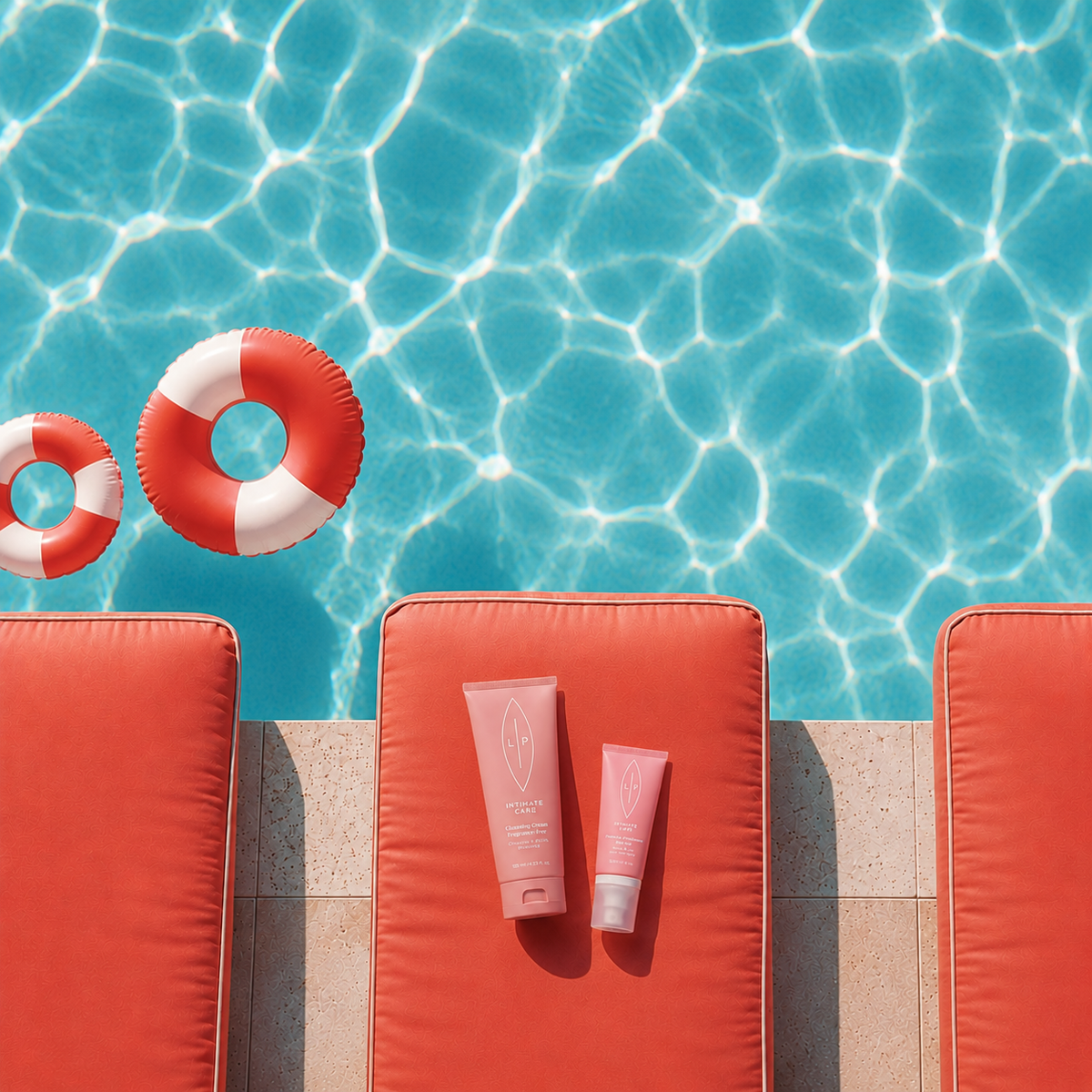
Why we don't believe in intimate soaps
Even products marketed as gentle or pH-neutral are usually built on detergents. And detergents do exactly one job: dissolve fat.

What a foaming cleanser actually is
Foam comes from surfactants — molecules that grab oil and carry it away with water. They don't distinguish between grime and your skin's own lipids.
On body skin that's manageable. In the intimate area, where skin is thinner and mucous membrane is close by, the same product removes more than it should.
The pH question
Classic soap has a pH of around 9–10. The environment there is acidic. Every wash raises local pH, and it takes hours to come back down.
A cleanser at pH 5.5 is better than soap, but pH isn't the only issue: the surfactant still strips lipids.
Why an oil or cream cleans better here
Oil dissolves oily soil — sebum, residue, sweat — without surfactants, and leaves a thin protective layer behind.
That's why cleansing oils can be left on the skin, while soap has to be rinsed off.
In practice
Once a day is enough. Externally only — the vagina cleans itself.
No sponges, no scrubbing, lukewarm water. And if you feel you need a second wash during the day, the product is usually the problem, not your hygiene.
This article is for information only and does not replace medical advice. For persistent or severe symptoms, please consult a doctor.