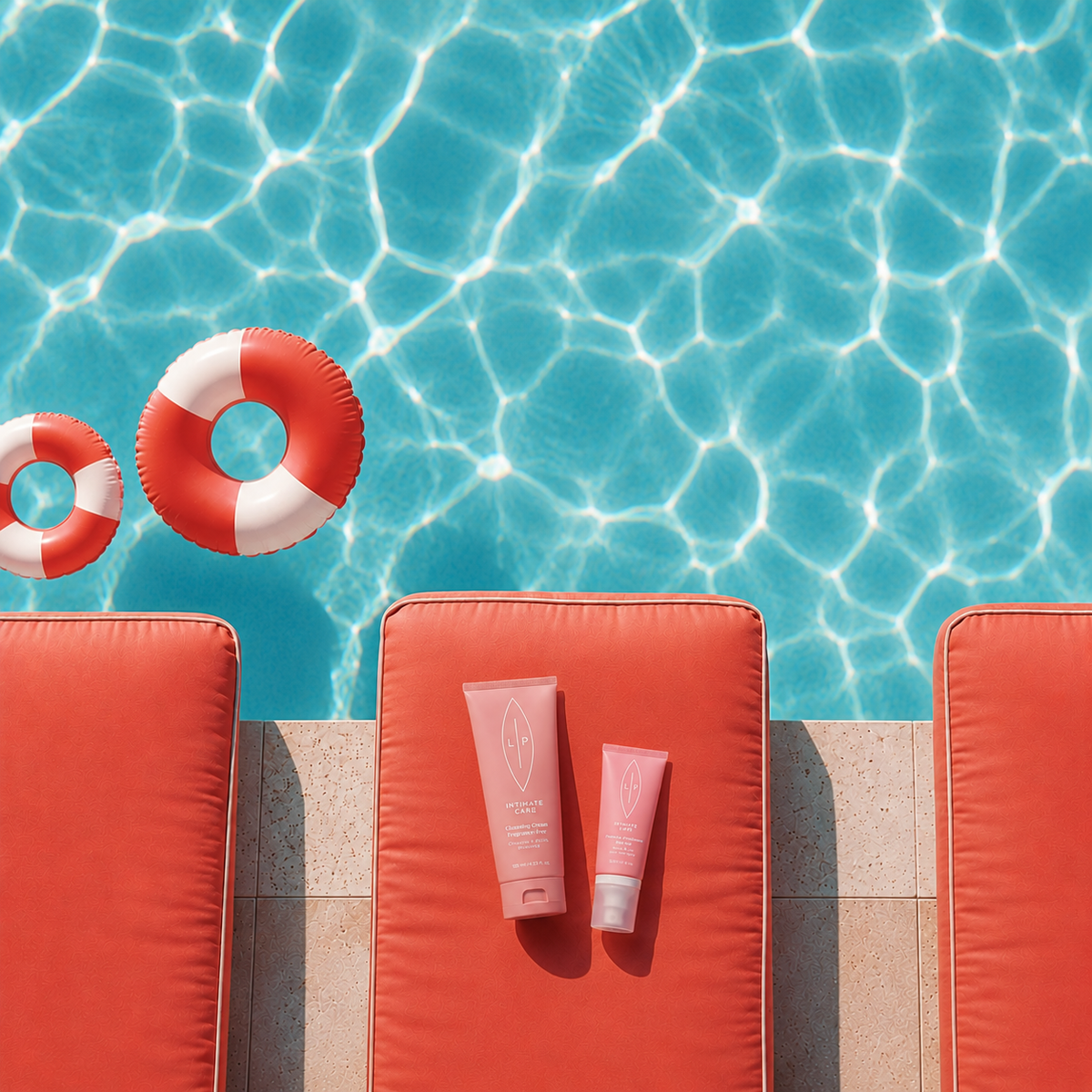
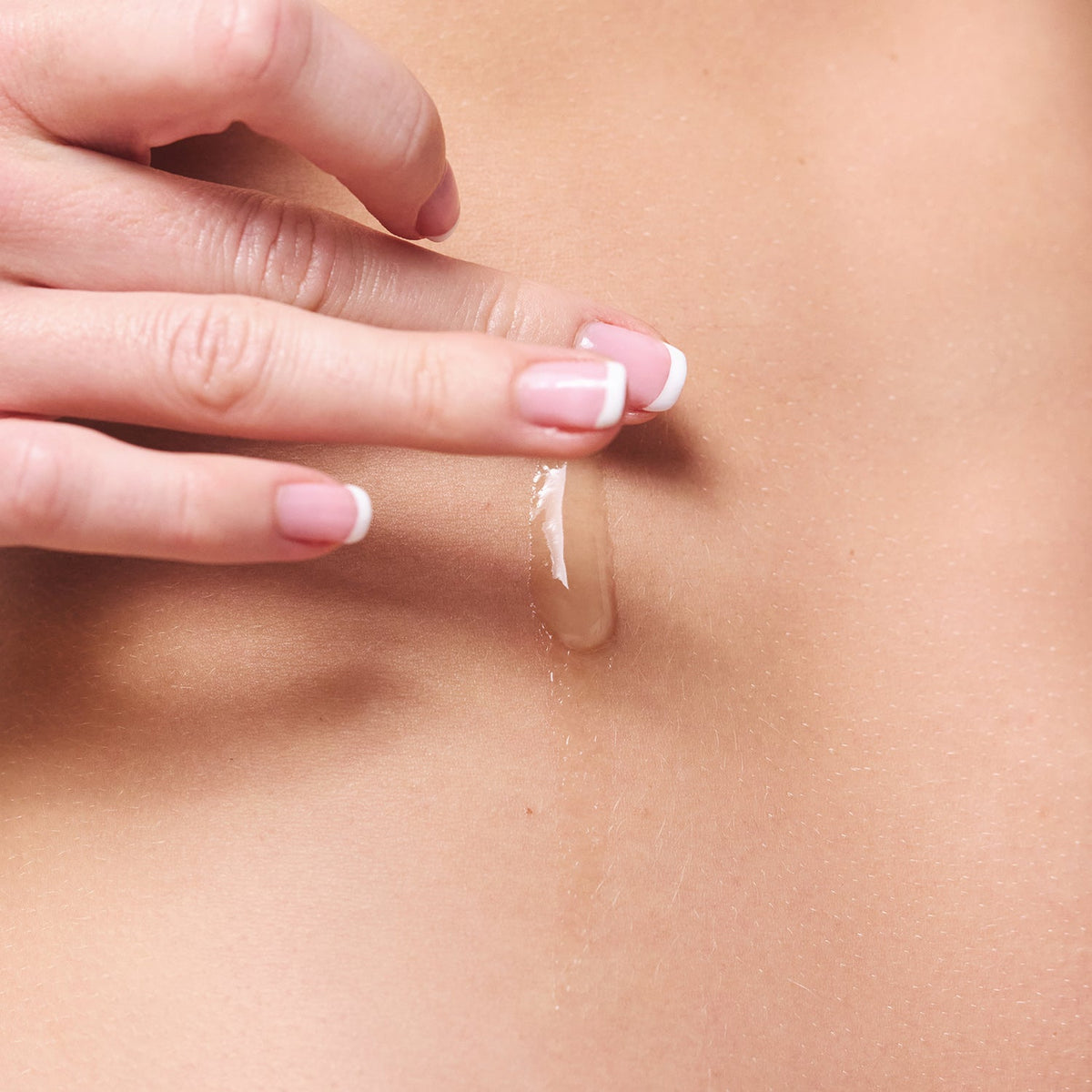
Our approach to fragrance
Some products in the range are entirely fragrance-free. Others carry a discreet, natural scent. That isn't inconsistency — it's a decision made product by product, based on where it goes and why.
Why fragrance is a question here at all
Synthetic fragrance is among the most common causes of contact dermatitis. On vulvar skin, which is thinner and more permeable than facial skin, the margin for error is smaller.
And there's a second problem: fragrance is often used to mask a perfectly normal scent — solving a problem that doesn't exist.
Where fragrance never goes
In products applied to mucous membranes or to skin that is already irritated: the balm, the prebiotic and postbiotic cleansing oil, the glide, the cleansing cream.
There, "fragrance-free" isn't marketing — it's a requirement.
Where it does, and on what terms
In products applied externally with a different job to do, such as the deodorant or the sea buckthorn and fragonia oil.
The scent there is of natural origin and free from the 26 declarable fragrance allergens listed in EU law. And in every case there is also an unscented option.
How to choose
If you have sensitive skin, a history of irritation, or you're pregnant or menopausal, start with the fragrance-free products.
If you've never reacted and you like a discreet scent, the scented products in the range are designed to be the gentlest possible version of that choice.
This article is for information only and does not replace medical advice. For persistent or severe symptoms, please consult a doctor.
Products mentioned

Cleansing + Moisturising Oil — Prebiotic + Postbiotic
Fragrance-free cleansing + moisturising oil · 75 ml
€22,00

Cleansing + Moisturising Oil — Sea Buckthorn + Fragonia
Refreshing cleansing oil with sea buckthorn · 75 ml
€22,00

Lip Balm — Macadamia + Oat
Fragrance-free vulva care balm · 50 ml
€21,00