Menopause changes everything — including your vulva
Hot flushes and broken sleep get discussed. Vaginal dryness, burning and discomfort during sex get much less airtime — though they affect roughly one in two women after menopause.
What oestrogen was doing down there
Vulvar and vaginal tissue carries oestrogen receptors. Oestrogen keeps the epithelium thick, natural moisture steady and blood flow good.
As it falls through perimenopause and menopause, tissue becomes thinner, drier and more fragile. Doctors call this the genitourinary syndrome of menopause.
What changes in practice
Less natural moisture and a pulling sensation. More sensitivity to underwear, soap, chlorine. Discomfort or pain during sex. And a shifting flora: lactobacilli decline and pH rises.
That also explains why many women notice more urinary tract infections or imbalances at this stage.
Why it doesn't resolve on its own
Unlike hot flushes, which usually ease over the years, intimate dryness tends to persist or worsen without care.
The good news: it responds. Daily lipid protection and soap-free cleansing make a visible difference within a few weeks.
What helps
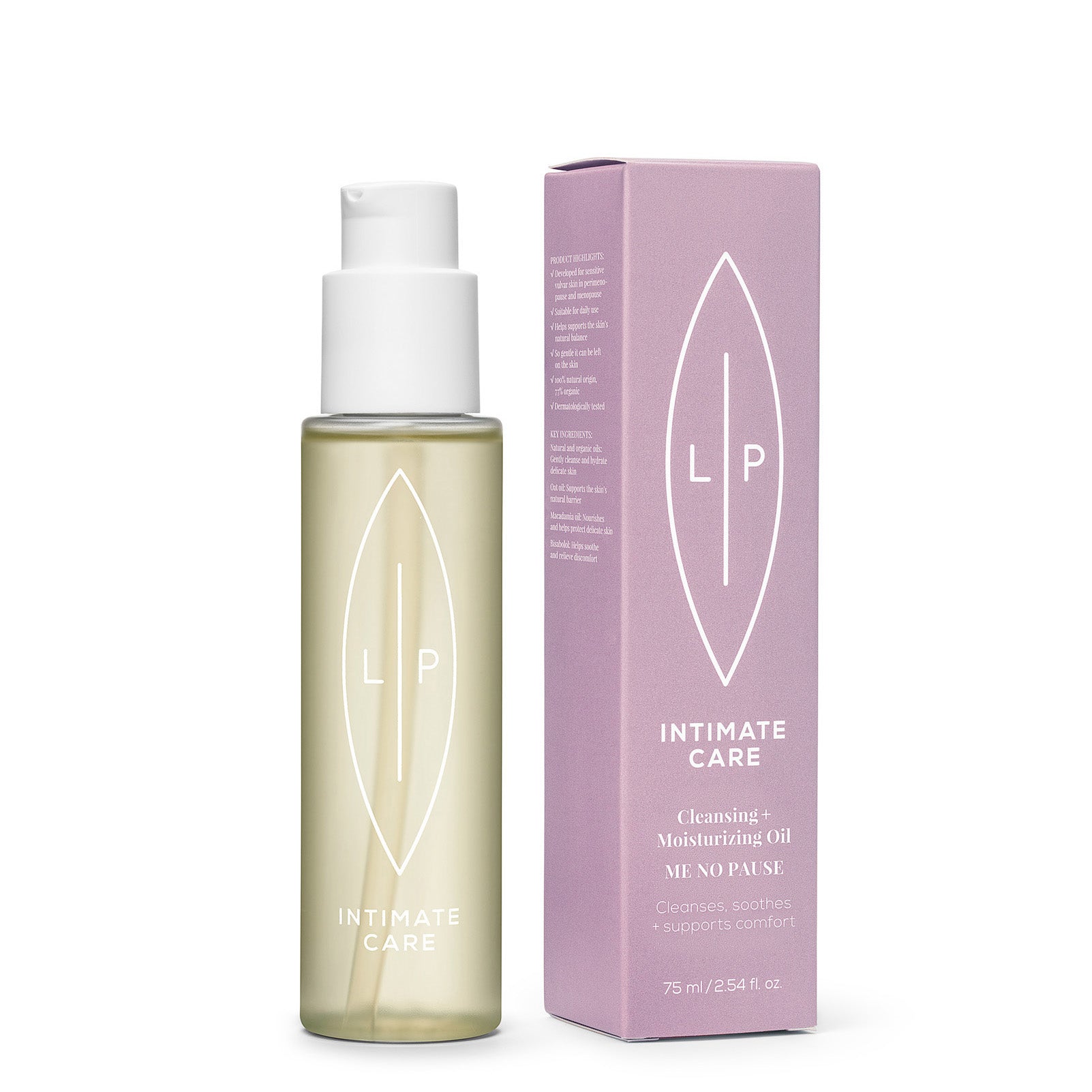
Cleanse once a day with a non-foaming oil or cream, externally only.
Use a moisturiser for the area regularly — not only before sex — and a water-based lubricant when needed.
Cotton underwear, and no scented wipes or douching.
When to speak to a doctor
If there is pain, bleeding, persistent burning or recurrent infections, ask for a gynaecological assessment.
Effective treatments exist, both local hormonal and non-hormonal, and skincare works alongside them rather than instead of them.
This article is for information only and does not replace medical advice. For persistent or severe symptoms, please consult a doctor.